


Paris: The City That Shapes Vision
Introduction — a sense of scale
On 8 March 2022, I saw Paris for the first time only for a moment — during a journey to the south of France. At that time, life suddenly changed its direction, and I had to leave home without even having time to find words for an explanation.
This article is already about a second, more conscious encounter with the city to which one wants to return, and which, I hope, will become part of my story more than once. Paris met us in silence. And perhaps that is exactly what I remembered most.
I returned for the second time already with a feeling of inner silence. Without haste. Without noise in my head. And suddenly I noticed: this city is in no hurry to speak about itself. It does not try to please. It needs to be read — as a space. Through the distance between buildings, through the light on pale stone, through the pauses between impressions.
The Eiffel Tower — structure and symbol
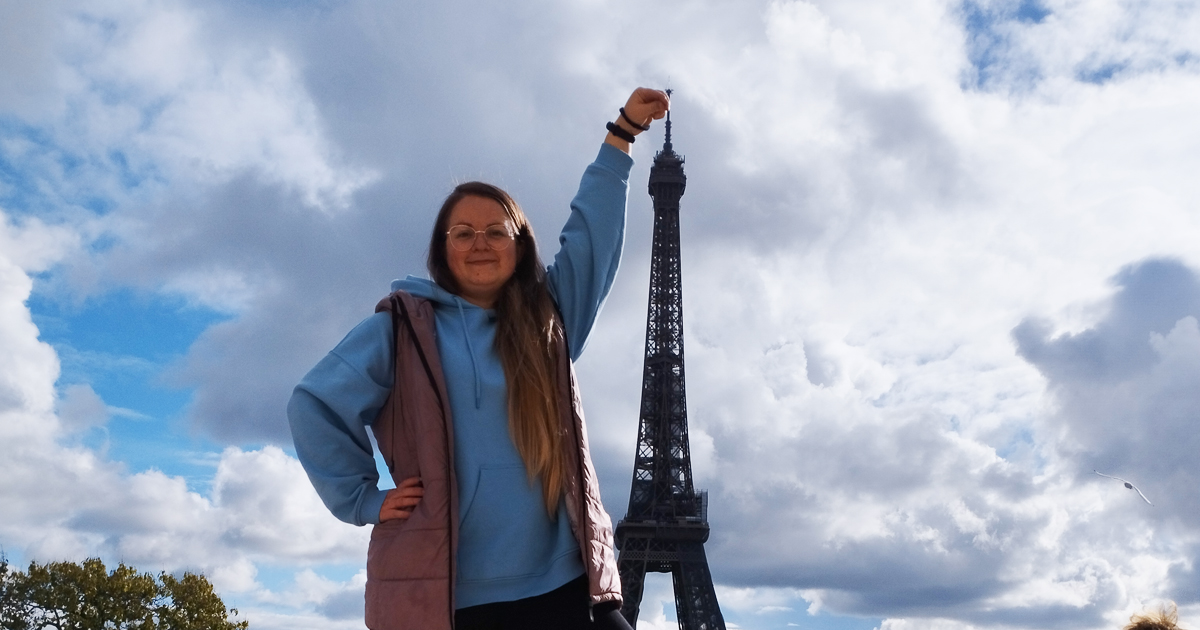
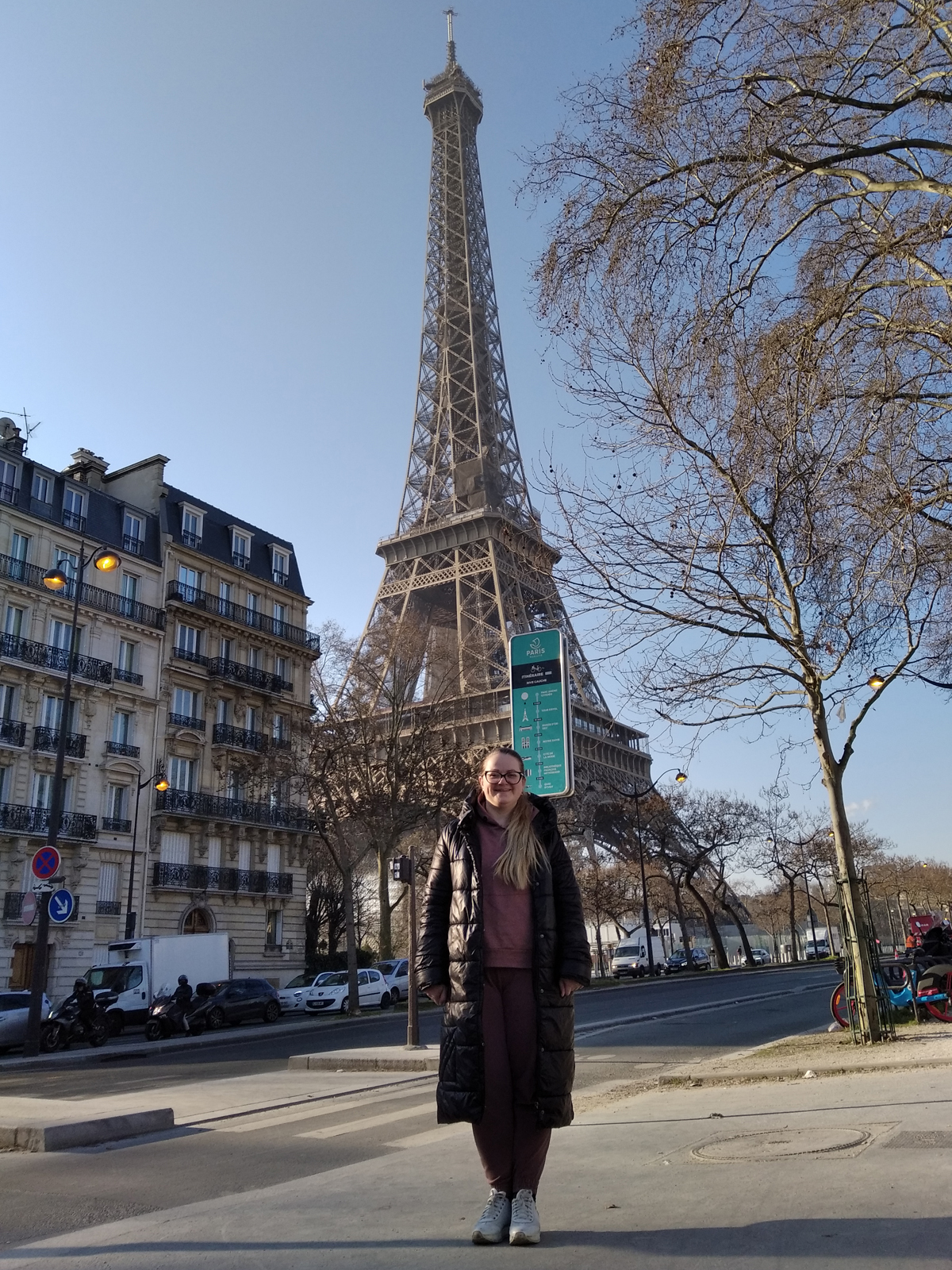
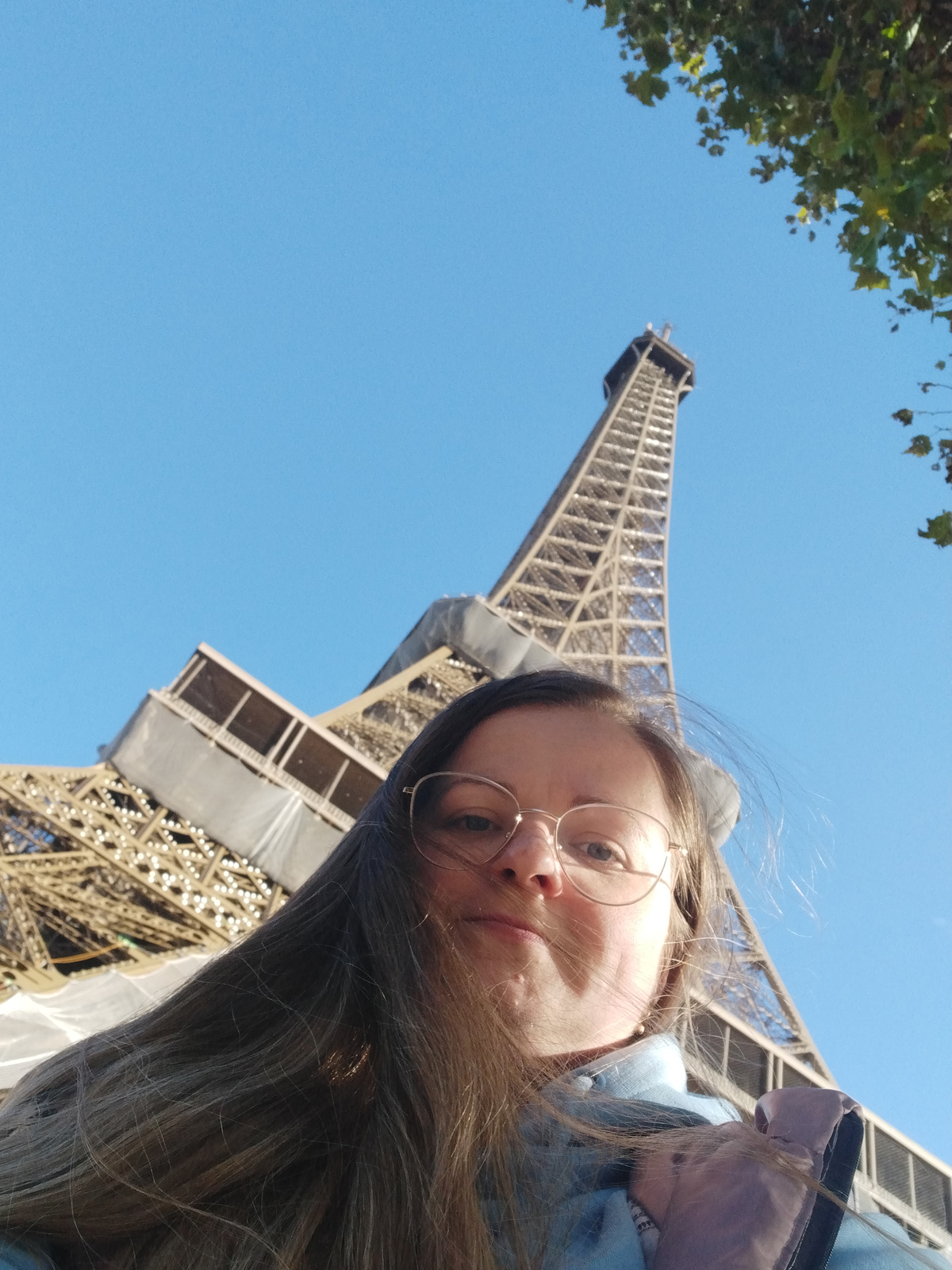
When you stand under the Eiffel Tower for the first time, romance suddenly retreats somewhere. The first feeling is not “wow”, but astonishment: how is this even holding together?
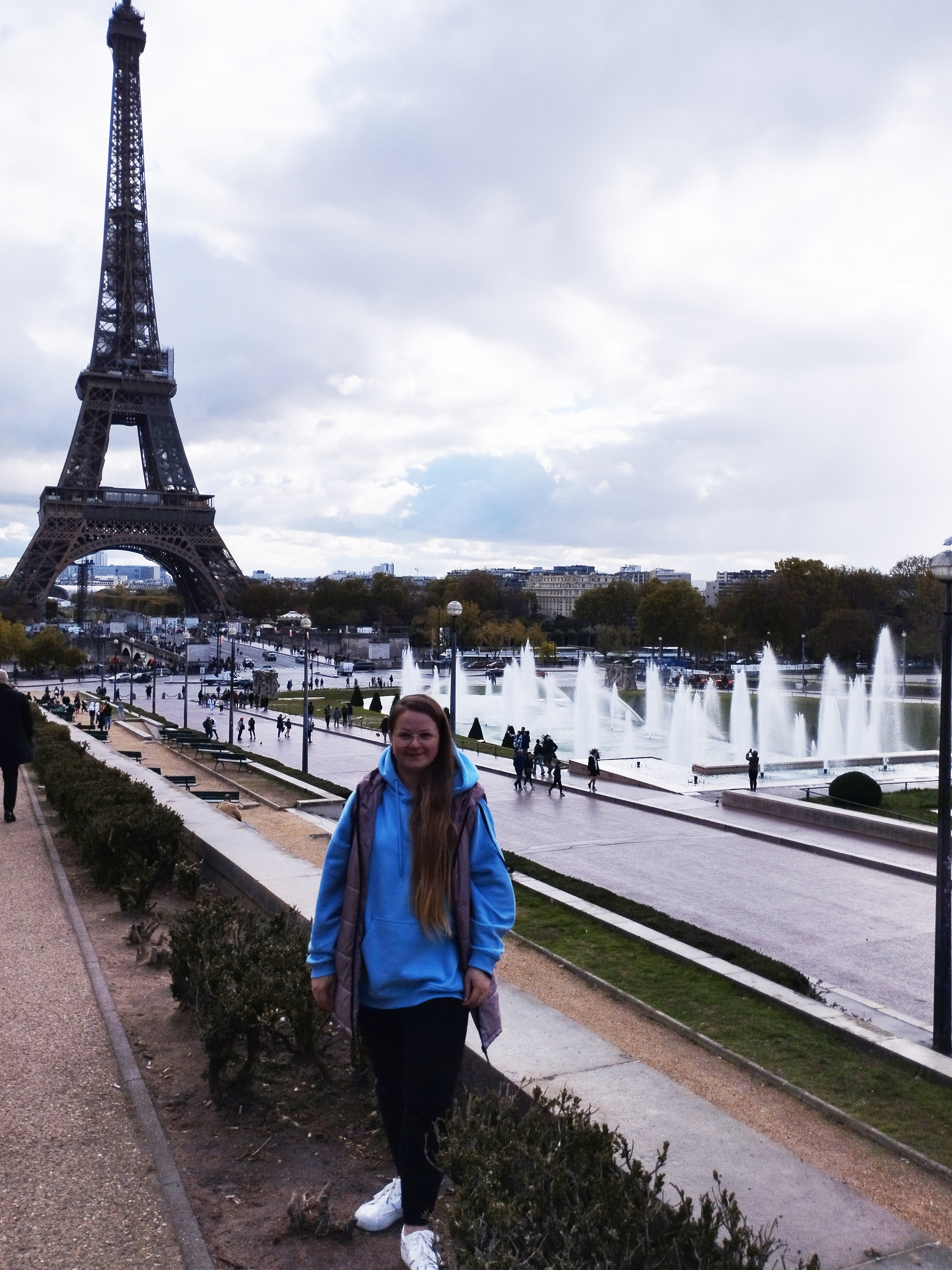
It does not look like a monument in the usual sense. Rather, it resembles a drawing that has risen to its full height and pressed itself into the sky. From afar, from the Trocadéro square, it is an almost perfect silhouette — a simple, pure vertical. But as soon as you come closer, that simplicity falls apart into hundreds of lines: metal diagonals, intersections, rhythm. Your gaze no longer flies upwards — it slides along the structure, as if reading it from within.
The tower was built in 1889 for the World Exhibition dedicated to the centenary of the French Revolution. It was intended to remain only for 20 years. Many writers and artists of the time signed petitions against it, calling it an “iron monstrosity” that spoiled classical Paris. But it was precisely this boldness — to show the metal and not conceal the bolts and joints — that made it a symbol of a new era. Paradoxically, a temporary structure became the city’s main calling card.
What impresses me is not its height (over 300 metres), but its honesty. Nothing in it is disguised. It does not pretend to be stone and does not hide its structure beneath decoration. It has almost no “body” — only lines and the air between them. And that air works no less than the metal itself.
By day, the tower seems graphic, almost dark against the pale sky. The light does not fall on it — it passes through it. In the evening everything changes: it begins to glow and turns into a sign — simple, recognisable, almost childlike in shape. A few lines — and it is recognised in any country.
Light and distance
In Paris, light behaves unusually. It does not simply illuminate buildings — it places them at a distance from one another. Even on an overcast day, the city does not become flat. Clouds work like a soft filter: the façades look calmer, yet at the same time deeper. The pale Parisian stone — limestone, from which the city centre was built for centuries — neither shines nor darkens abruptly. It holds the light and diffuses it.
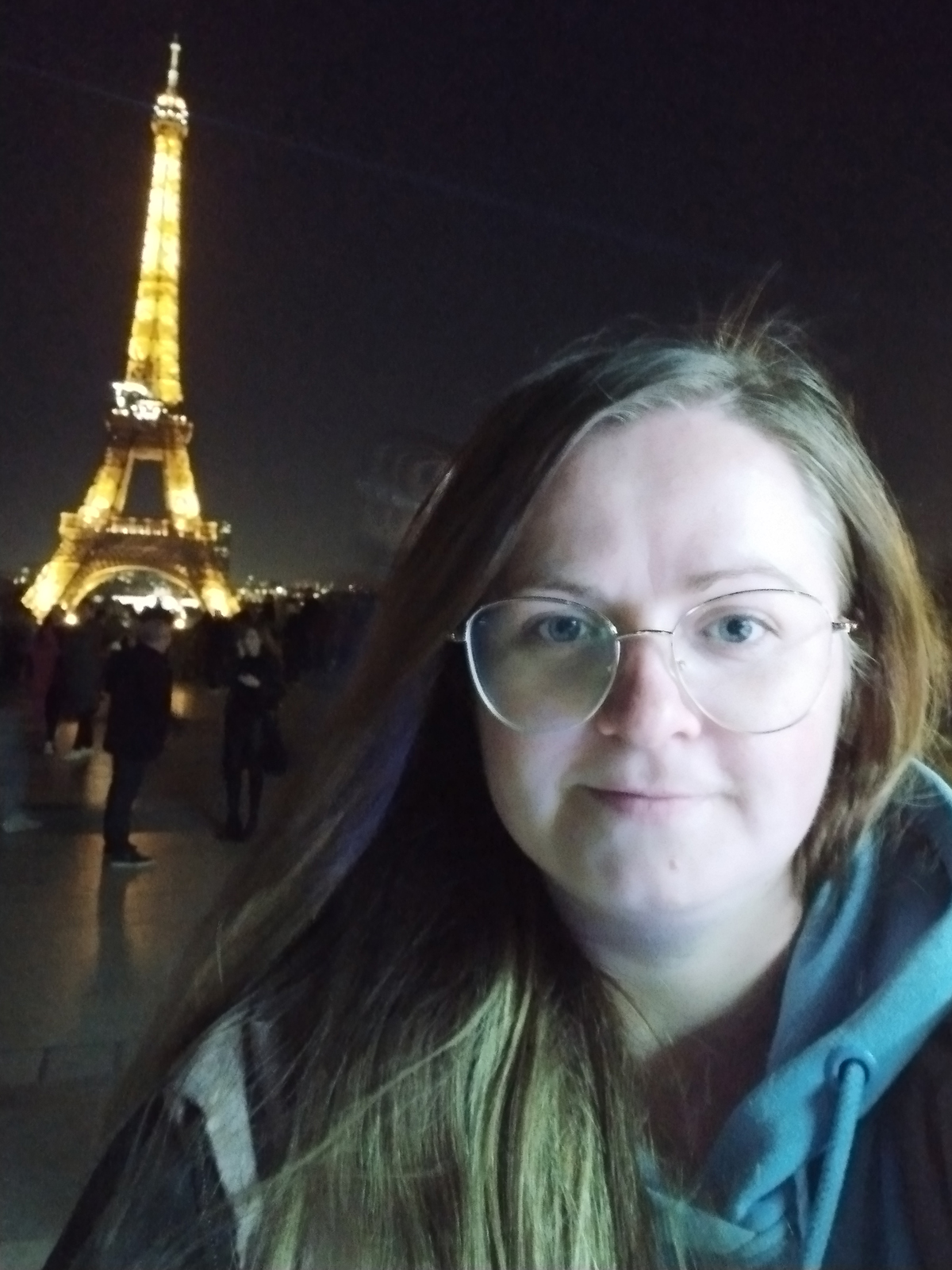
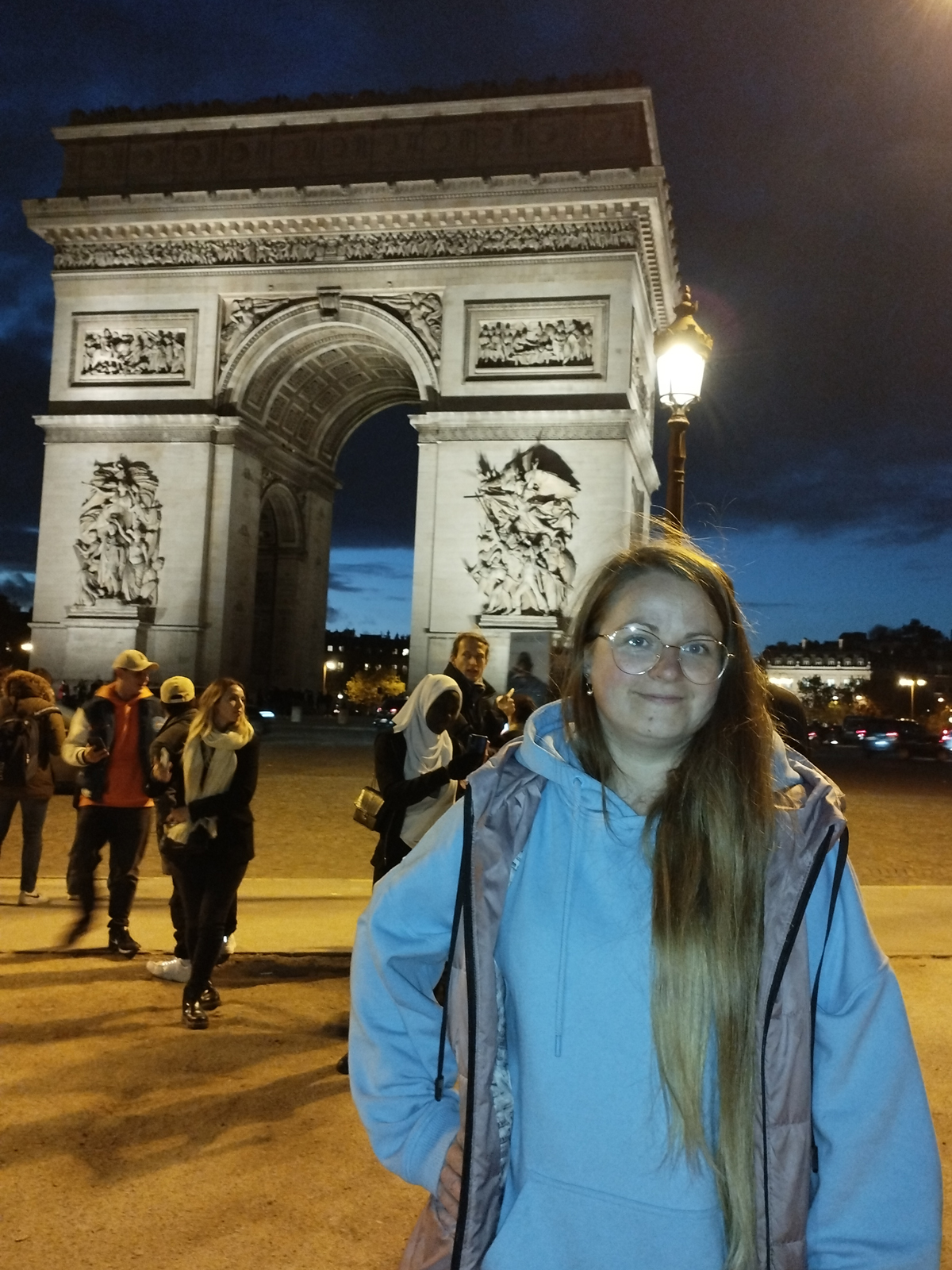
In open spaces — by the Seine or on the Trocadéro esplanade — this is felt especially strongly. There you do not want to come too close. You want to stop, take a few steps back and simply look. There must remain air between you and the architecture — that same distance an artist instinctively takes before a canvas in order to see the composition as a whole.
Such an effect is not accidental. In the middle of the nineteenth century, during the great reconstruction of Paris, Baron Haussmann deliberately laid out broad boulevards and opened long perspectives. Old medieval streets were widened, buildings were aligned along a single line so that the city could be read from a distance. What seems natural today was in fact a very carefully considered decision.
In sunny hours, the contrasts here are not harsh. Light glides over stone and metal, not cutting through the form but gathering it into one tonality. In the evening, everything becomes more graphic: darkness removes the details, leaving silhouettes and individual lights. Space seems to contract, yet it does not disappear — it becomes more restrained.
I noticed that in this city I begin to look differently at painting as well. Not through the drama of light and shadow, but through the air between forms. Not to come too close, but to build a composition from intervals — from pauses that are just as important as the objects themselves.
Paris teaches you to look not only at what is before you, but also at the space beside it. It is precisely in these pauses that the feeling of the city is born.
The Louvre — a space that teaches how to look
When I approached the Louvre, I was no longer thinking of it as “the largest museum in the world”. That definition explains nothing. The Louvre turned out not to be about size — but about a way of looking.
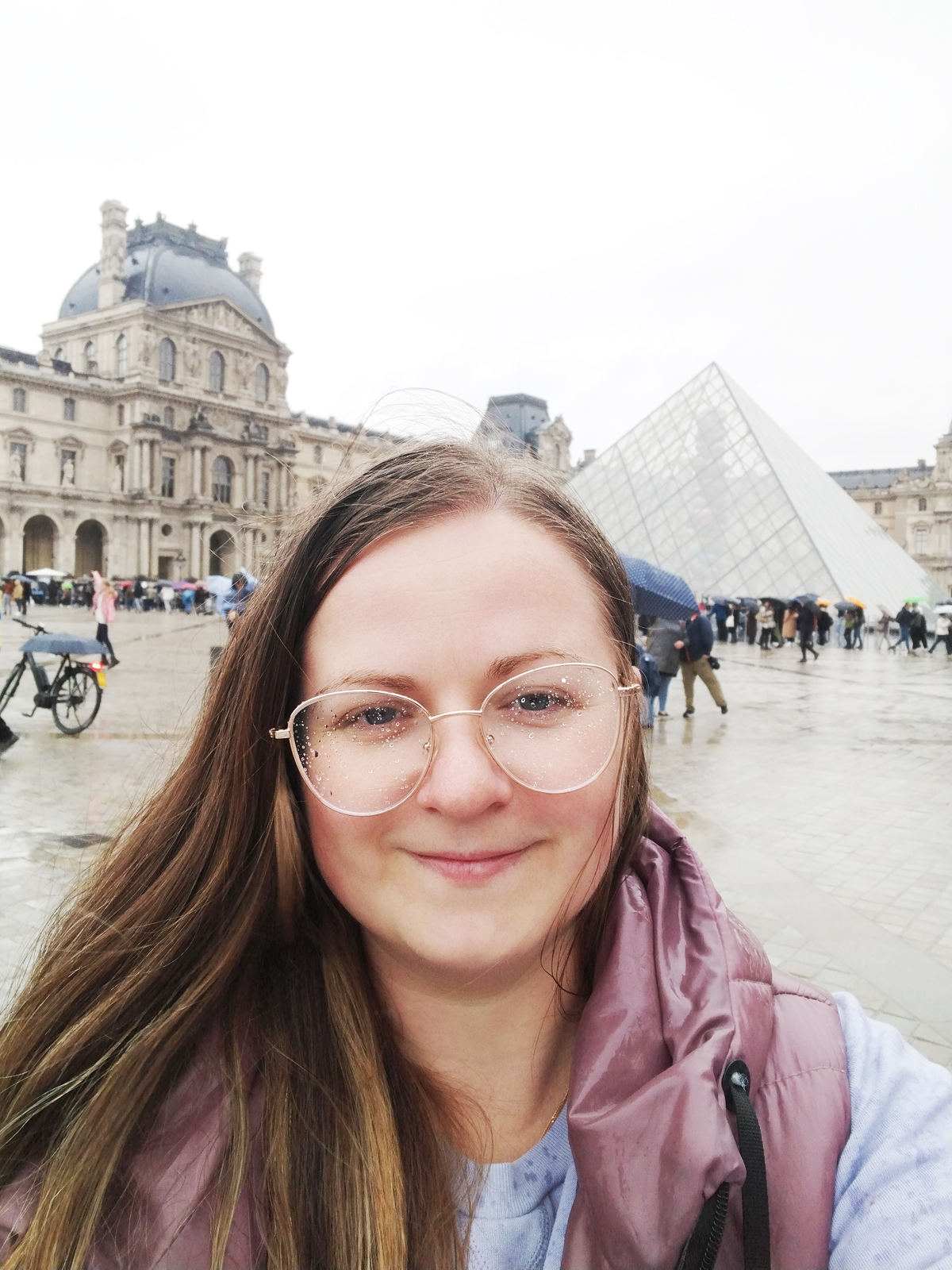
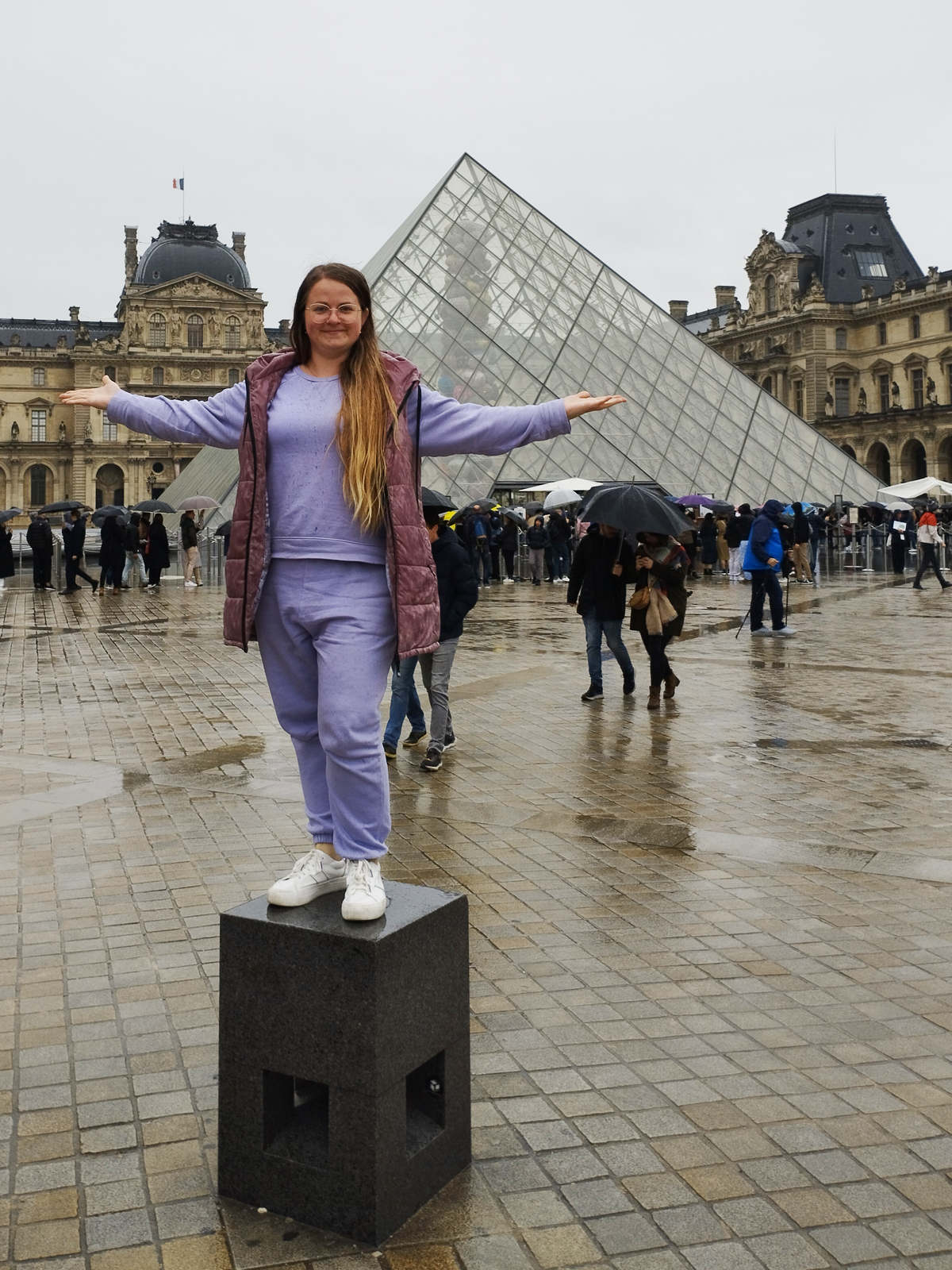
From the outside, it is perceived not as a single building but as an entire system of courtyards and façades. Long horizontals restrain the space, the open courtyard leaves air, and the glass pyramid does not argue with the old palace — it places a careful pause between eras. There were once disputes about it, but today it seems a natural part of the ensemble. Here it is almost impossible to arrive “by accident” — the space has already decided from where you will look.
Few people remember that in the twelfth century there was a fortress on this site that protected Paris. Later it was rebuilt into a royal palace, and during the French Revolution, in 1793, it was opened as a museum for everyone. For its time this was a bold idea: art no longer belongs only to the king — everyone may see it.
Inside, the Louvre does not rush you. The galleries stretch on, perspectives repeat, arches frame the space one after another. You walk — and it feels more like a sequence of scenes than a corridor. Each turn opens a new angle. The sculptures are placed in such a way that you want to walk around them, step back, and then come closer again.
Here, for the first time, I clearly felt: to look is not an automatic act, but an effort. One needs to stop. To give oneself time. Not to search for the most famous, but to allow the space to lead you.
The light in the halls is soft, diffused. It does not turn art into a spectacle. It simply allows form to be — without unnecessary effect. In such light, sculpture seems almost quiet, and painting deeper than in reproductions.
For me, the Louvre became not a collection of masterpieces, but a lesson in respect for pause. Each work requires space, distance and time in order to be truly seen. The Louvre does not try to impress. It teaches patience. And it is precisely this feeling that remains the longest.
The silence of a great city
Paris is a great city, but it almost never sounds harsh. There is no feeling here that someone is pushing you in the back. Scale is felt not through noise, but through restraint, which appears exactly where you expect bustle.
In many capitals, movement is tense: one has to hurry, react, manoeuvre in the flow. In Paris, even in the centre, a different rhythm appears. People walk, transport moves, cafés are full — life continues, but without inner pressure. The city does not force you to accelerate. It allows you to move as feels natural to you.
This is felt especially strongly by the Seine. The river does not try to impress — it simply passes through the city like a calm horizontal line. In fact, Paris began from it: as early as Roman times, the settlement of Lutetia arose on an island in the middle of the water, because the river was both a road and protection. Later the embankments were reinforced with stone to restrain floods, and these level lines of the banks became part of the city’s geometry. Today the water works in almost the same way — not as decoration, but as an axis of balance.
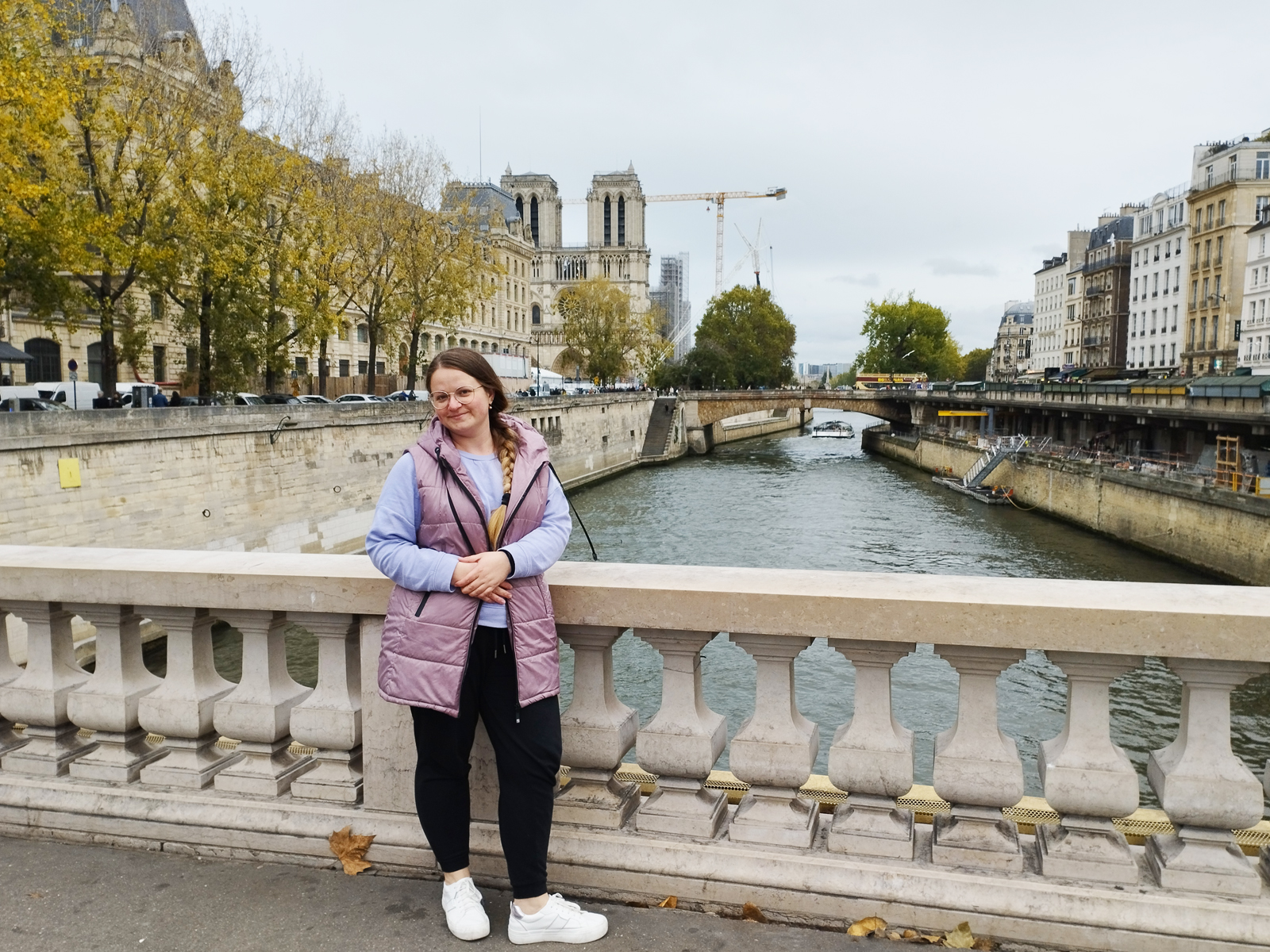
Stone steps down to the river, old bridges, the slow movement of barges create not an event, but a state. Here it is easy to stop for no reason — simply to watch the city move past. Even the famous Parisian boulevards, which seem lively, were designed in the nineteenth century not only for transport, but also for perspective — so that the city could “breathe” and not oppress with density. That is why there is always distance between façades, and a pause between noises.
This silence does not resemble the silence of nature and has none of the solemnity of a temple. It is urban. It arises from the proportions of the streets, from the pale stone, from the repeating façades that do not shout, but hold the rhythm. It is silence within movement, not outside it. Here I felt an important thing: a strong image does not always require dynamics. Sometimes it is born from duration — from the moment when nothing needs to be intensified.
Paris taught me to leave more space in my work. Not to fill the canvas with excess, not to look for tension where calm is sufficient. To allow form to sound quietly.
Notre-Dame — the vertical of time
You do not approach Notre-Dame suddenly. It appears gradually: first it rises above the roofs, then occupies the entire horizon, and only when you are very close do you begin to distinguish the stone, the carving, the details. The façade does not reveal itself at once — it immediately directs the gaze upwards.
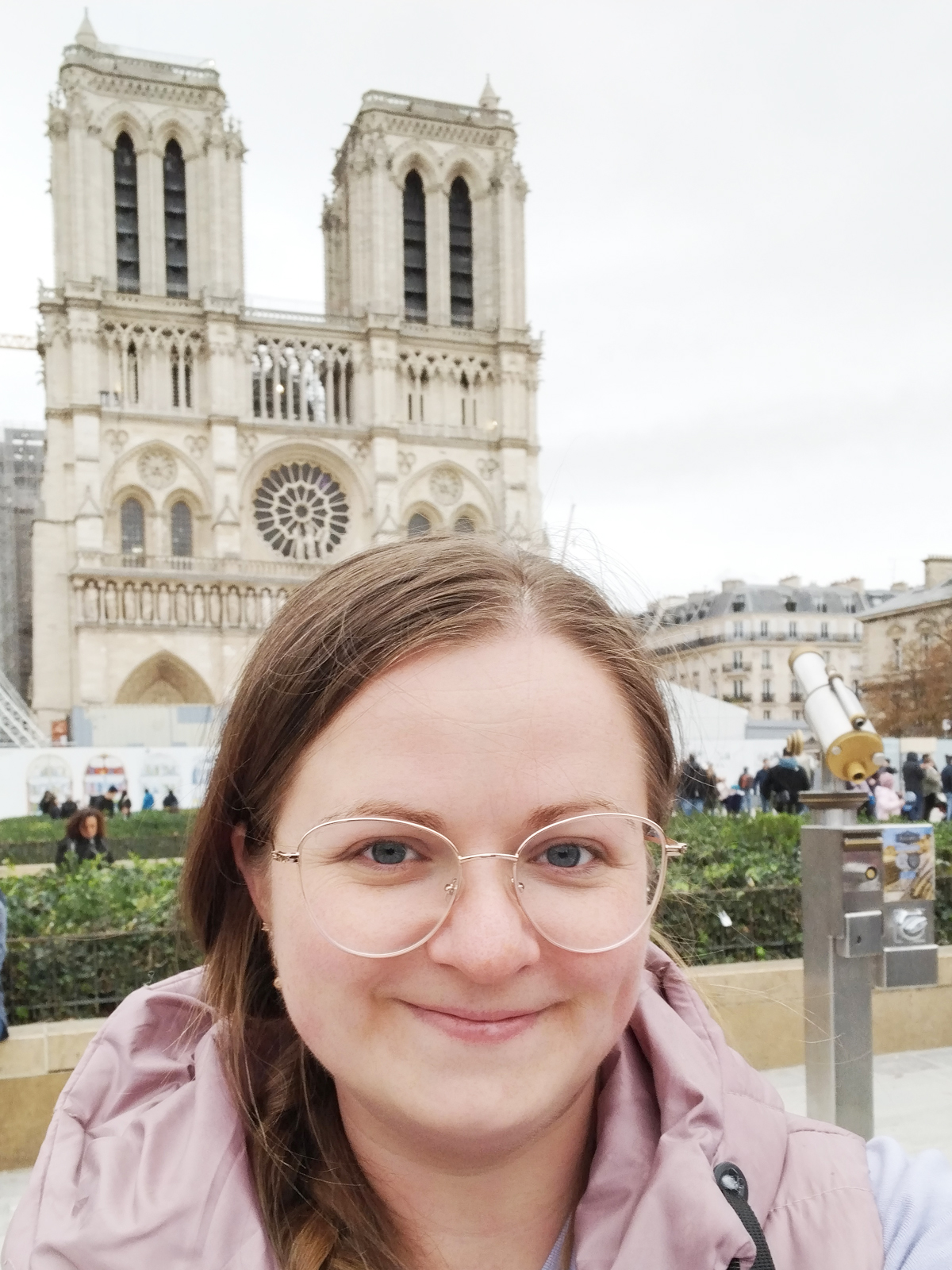
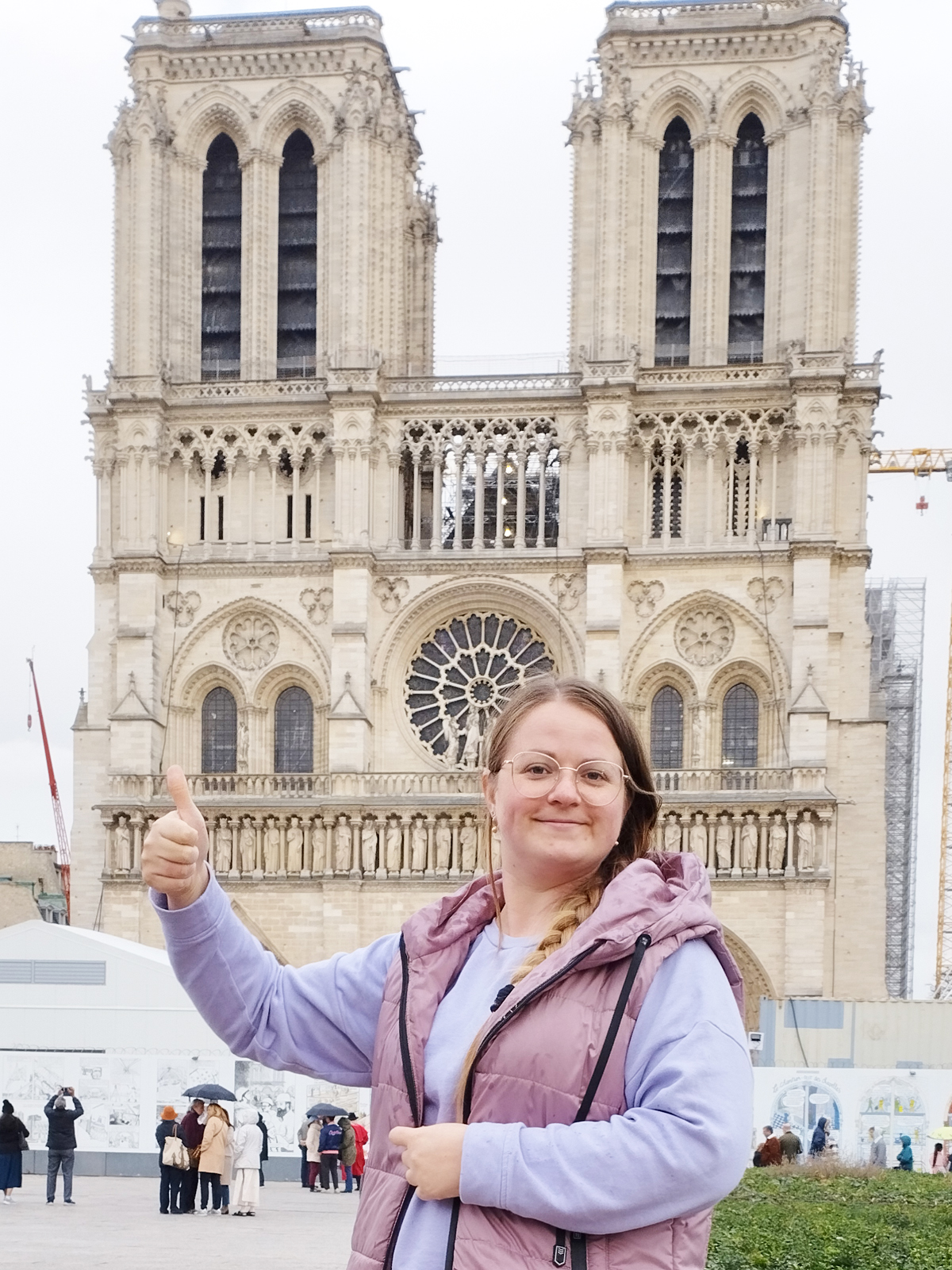
Construction of the cathedral began in 1163 and lasted almost two centuries. Generations of craftsmen worked on it, often without seeing the completion of their own work. Later it survived the French Revolution, when part of the sculptures was destroyed, the large-scale restoration of the nineteenth century under the architect Viollet-le-Duc, and the fire of 2019, after which restoration began again. Here history is felt not as a date, but as lived time layered one upon another.
Gothic here works not as decoration, but as movement. Stone buttresses support the walls, pointed arches transfer the weight further on, and the whole structure seems to stretch upwards. This is architecture that does not broaden space, but raises it.
In front of the cathedral you do not feel smaller — rather, your posture changes. You want to straighten up, raise your head, look longer. The vertical gathers a person just as it gathers stone into one system. The light here is different from that on the open squares of Paris. It does not spread widely, but enters into the depth of the façade, lingers in the niches, emphasises the relief. Because of this, the stone seems heavier, the shadows denser, and the details reveal themselves gradually, when you give yourself time to see them.
For me, Notre-Dame became an experience of intense, yet very collected form. There is no decorative lightness here — there is a feeling of prolonged effort directed in one direction. It reminds one that art can live longer than an individual person. It is not created by a single gesture — it is formed over centuries, survives destruction and is restored again. This vertical does not oppress. It gathers and leaves a sense of movement that continues further — already beyond the limits of the building itself.
Shadow as architecture
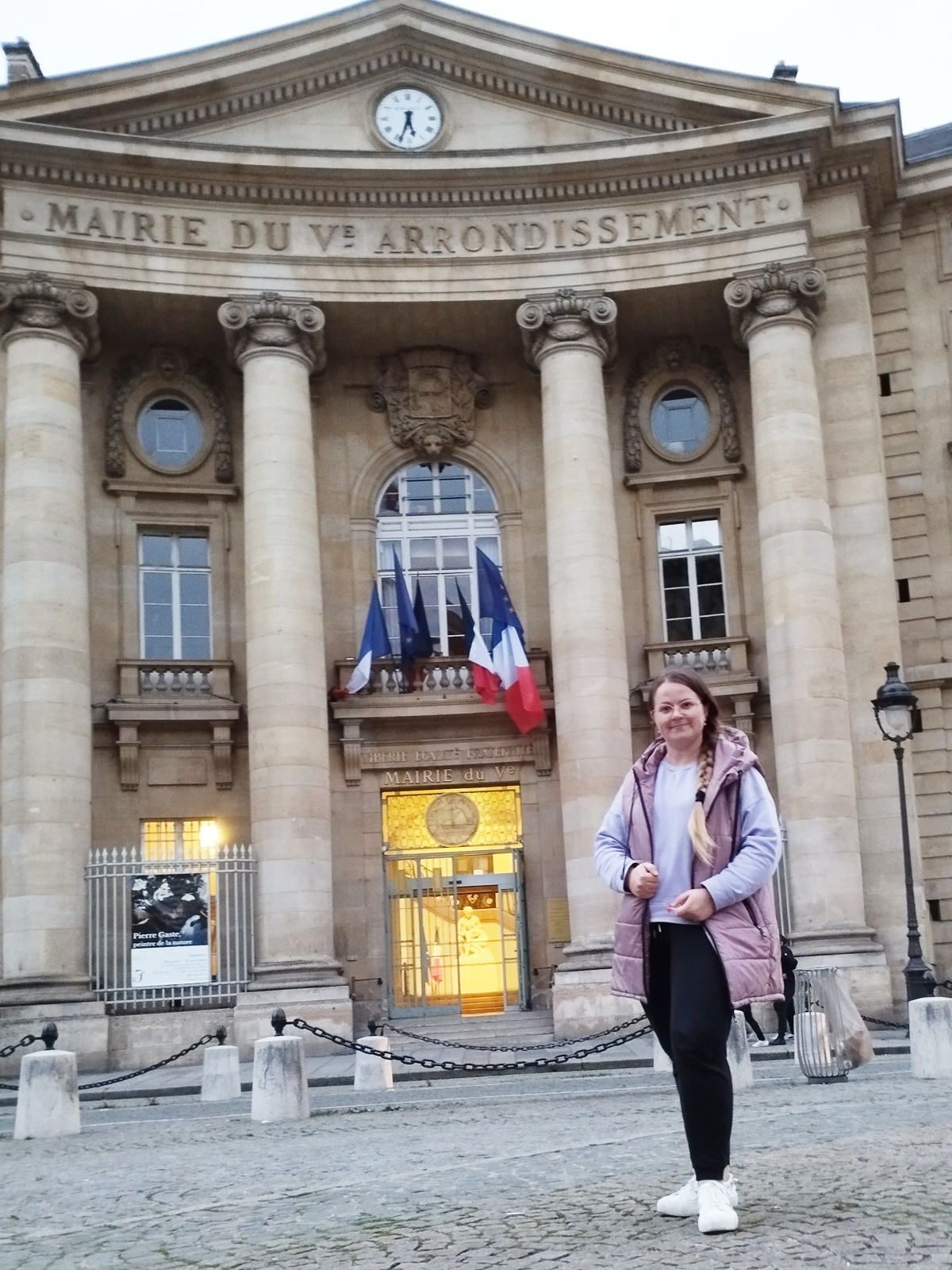
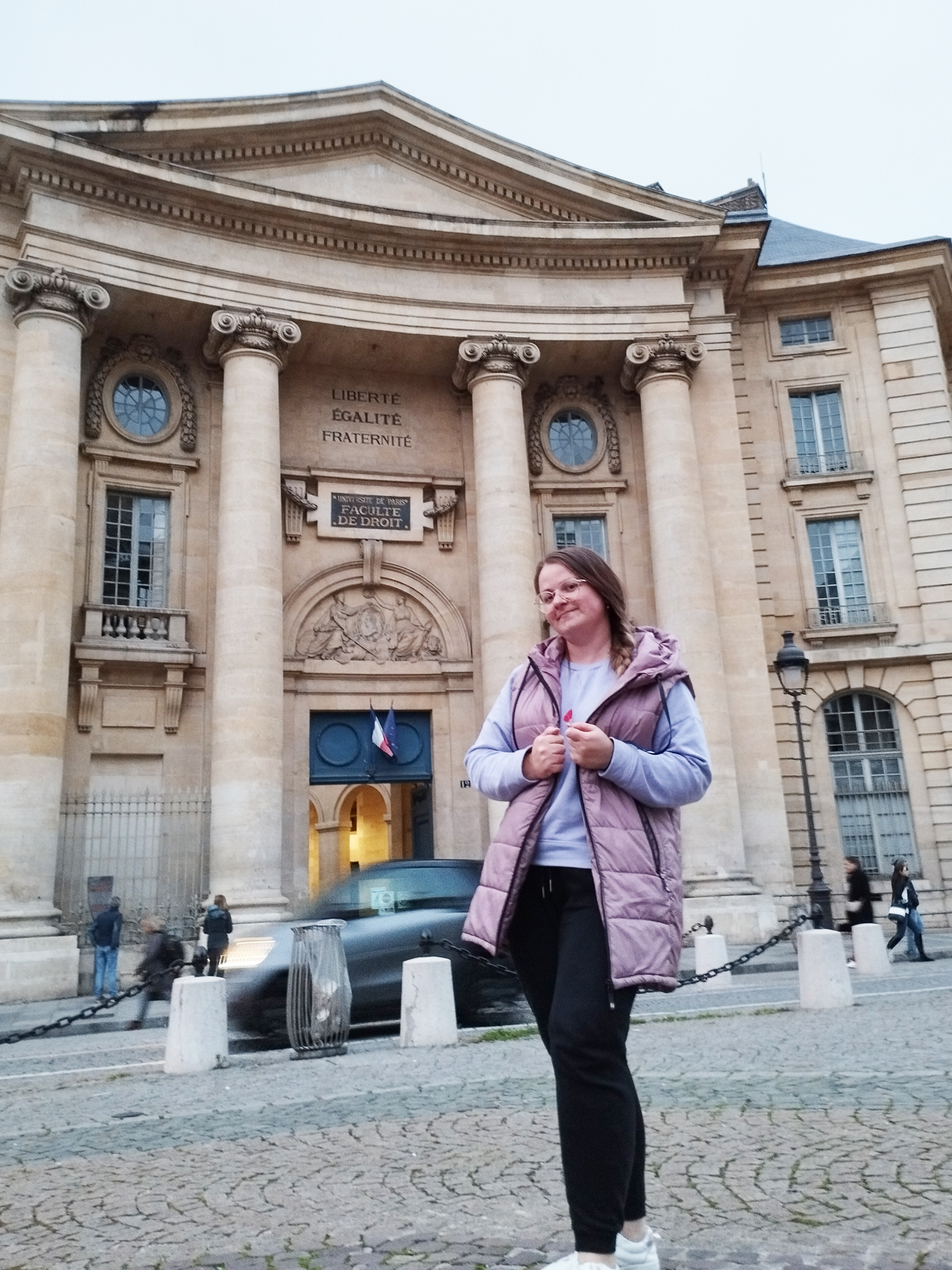
In Paris, sometimes you first see not a building — but its shadow. You walk along the street, and suddenly on a pale wall there appears a clear silhouette of a balcony, a wrought-iron railing or a tree. It is so graphic that it seems drawn. Only a moment later do you notice the building itself.
In the Marais or the Latin Quarter this is felt especially strongly. The streets there remain from medieval times — narrow, slightly crooked, completely unlike ceremonial boulevards. The sun reaches here only for a few hours, so the light works sharply, almost theatrically. In the morning the façades look light, by evening contrasting, as if the city itself were changing the scenery.
Once these quarters were even darker. Paris consisted of dense construction where neighbours could speak through their windows, and the sun scarcely reached the ground. Only in the nineteenth century, during the great reconstruction, did broader streets and open perspectives begin to appear. The light that seems natural today actually became the result of a long transformation of the city itself.
If you sit on a terrace with a coffee and do not hurry anywhere, you may notice a strange thing: the shadow slowly moves across the façade, as if someone were shifting an invisible line. Within an hour the whole scene changes — without any event, without any person. It is a slow movement, yet it gives a sense of time better than any clock. Shadow here does not decorate — it reduces. It removes the unnecessary, leaving only the principal lines. And suddenly the city can be read even without colour — only through the relation of light and dark.
For me this became a simple, yet important lesson: sometimes one needs not to add, but on the contrary — to let form speak for itself. Paris exists not only in stone, but also in these moving shadows. They change it every hour — quietly, almost imperceptibly, yet very precisely.
The Arc de Triomphe — the axis of the city
You approach the Arc de Triomphe in a completely different way from Notre-Dame or the Louvre. Here there is no need to study the details — it is immediately perceived as the point where everything around converges. As if the city gathers here, only to spread out again in different directions.
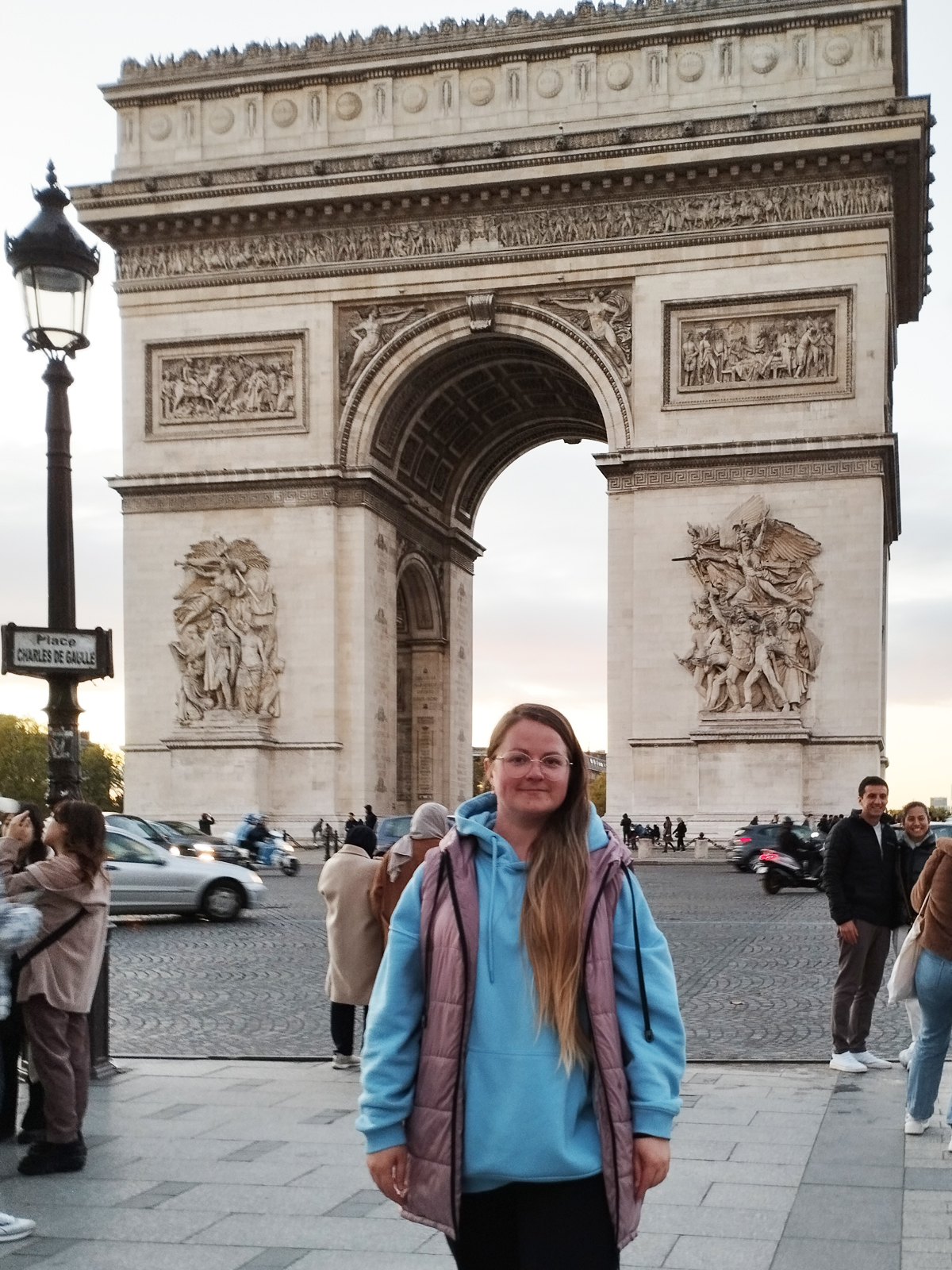
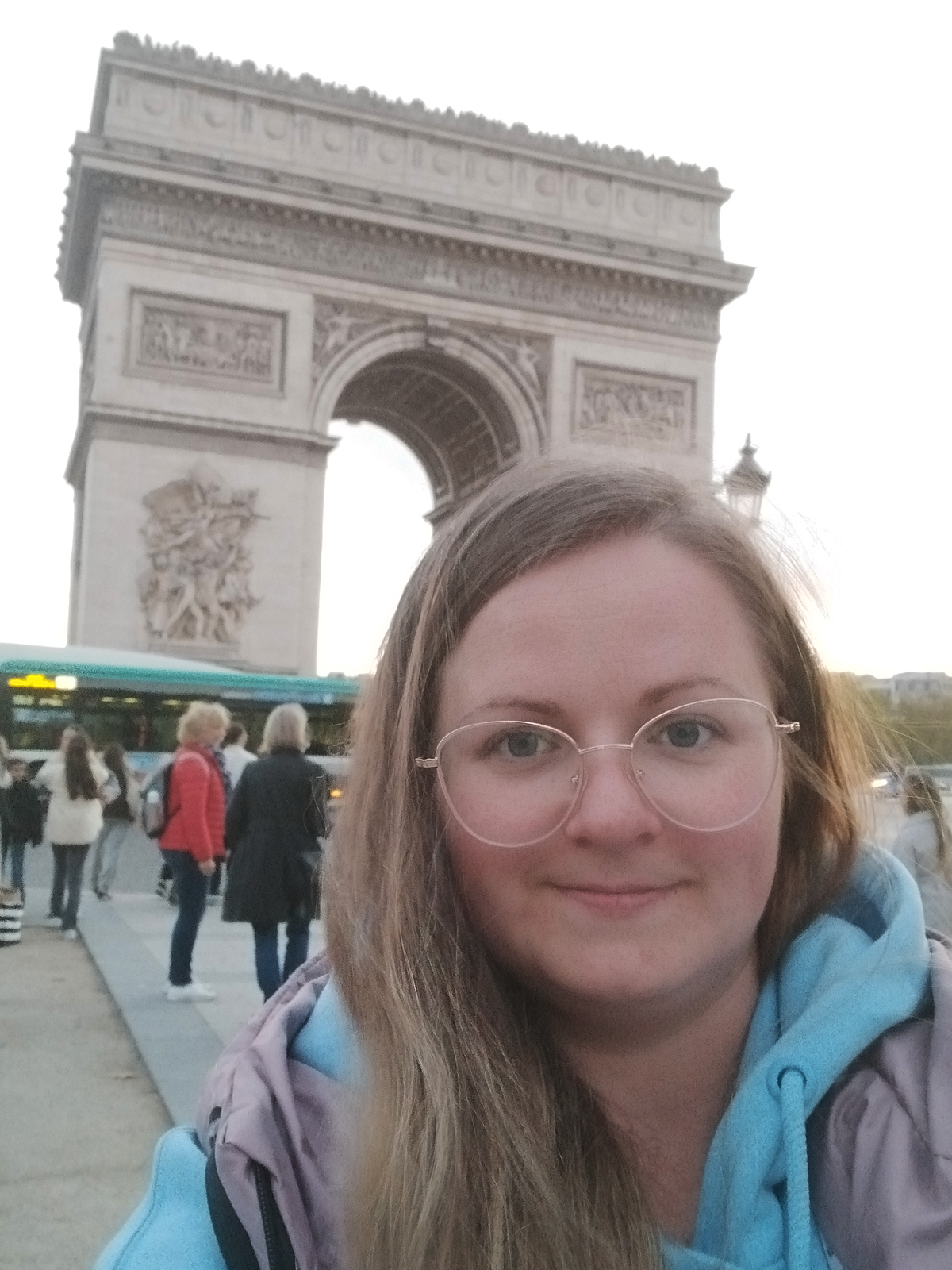
The arch was commissioned by Napoleon in 1806 after the victory at Austerlitz. He wanted the French army to pass triumphantly beneath it when returning home. Construction lasted for decades, and Napoleon himself never saw the completed structure. Over time it became a symbol not so much of victories as of memory.
Beneath the arch lies the Tomb of the Unknown Soldier. The eternal flame has burned here since 1923, and it is ceremonially rekindled every evening — this tradition was not interrupted even during the Second World War. Many people learn about this only on site, and then the monument suddenly ceases to be merely historical — it becomes very human.
Around the arch twelve avenues converge, forming a vast star. The French call this place not simply a square, but Étoile — “star”. If you look from above, the city appears almost like a drawing in which all lines meet at one point.
Standing beside it, you feel not only the structure itself, but its effect. Cars move around it in a circle without traffic lights — it is one of the busiest junctions in Paris. The flow seems chaotic, but in some strange way everything works. The arch remains the motionless centre around which this movement revolves.
Unlike Gothic cathedrals, it does not pull the gaze upwards. It leads it forward — along the avenues, into the depth of the city. This is architecture not of ascent, but of direction. For me this place became a reminder that composition can be built not only around a centre, but around an axis — a line that sets movement and connects space. Today the Arc de Triomphe works not only as a monument to the past. Every day it organises life around itself — transport, routes, meetings, walks. It does not simply stand in the city. It gathers it.
Paris that cannot be completed
After the Eiffel Tower, the Louvre, Notre-Dame and the Arc de Triomphe, it may seem that the city is already understood. As if you had broken it down into principles — axes, perspectives, planes. But as soon as you turn away from the main road, order suddenly disappears. Paris immediately becomes different — more alive.
In Montmartre, the streets obey no ruler at all. They rise upwards, break, stairs appear where you do not expect them. In the nineteenth century this district was a cheap outskirts where artists lived. Picasso worked in a cold studio, Modigliani paid for lunch with a drawing. Today, from the square in front of Sacré-Cœur, Paris looks like an endless field of roofs, and here the city is read not as a scheme, but as a landscape.
Place de la Concorde looks ceremonial, yet it was here during the French Revolution that the guillotine stood. Today the Luxor Obelisk rises on the square — it is more than three thousand years old, older than Paris itself. It once stood in the Temple of Amun in Egypt, and now it has become part of another city, another history. Paris knows how to include different eras in one space as if they had always been here.
Unexpectedly, in the middle of this stone city the Pompidou Centre appears. When it opened in 1977, many people were outraged: the building looked “turned inside out”, with all structures brought to the exterior. But that was precisely the idea — to show modernity without embellishment. Today the square in front of the centre is filled with musicians, students and passers-by, and here Paris sounds no longer historical, but present.
One could add dozens more places — the Opéra Garnier, the Luxembourg Garden, the Marais district. But even a long list does not complete the city. Paris does not resolve into a conclusion. It constantly changes the point of view: from the grand to the ordinary, from the historical to the contemporary, from the considered to the almost accidental. There is always one more turn of the street, one more façade, one more detail left in it.
That is why people return here — not in order to “finish looking”, but in order to begin looking again.
Epilogue — a personal frame of Paris
I lived this trip at once in two dimensions.
A little — through the eyes of an artist. I still caught the light, noticed the shadows, stepped back as if before a painting. Paris is built with lines and pauses — and I could not help but see that.
But much more strongly I lived it differently.
I was here as a beloved woman. As a loving mother. As someone who walks beside her own people — and does not want to hurry.
The morning begins with something simple: a warm paper bag with a croissant still hot inside. Crumbs on the fingers. Children’s laughter. Coffee steaming in the cool air. And at that moment Paris is no longer the “capital of art” or the “city of symbols”. It becomes the background for ordinary happiness.
It has long been called the city of love. And perhaps that is true — but not in the way guidebooks describe. Here love is not theatrical. It is quiet. It is in the way you cross a bridge over the Seine together. In the way someone takes your hand when the light becomes golden. In the way children press against you, tired, at the end of the day.
The city does not impose emotions — it allows them to happen.
And suddenly you understand: what is remembered is not the height of the tower or the scale of the squares. What is remembered is how you laughed on the steps. How long you searched for the way and suddenly found a little courtyard. How you sat beside one another, discussing nothing, and that was enough.
Paris does not impress loudly. It embraces slowly.
And when you leave, you carry away with you not a list of places, but a very simple state — when the ones you love are beside you, and the city seems to breathe together with you. Perhaps that is exactly why one wants to return here. Not for the sake of the landmarks. But for the sake of that day when everything was ordinary — and at the same time special.
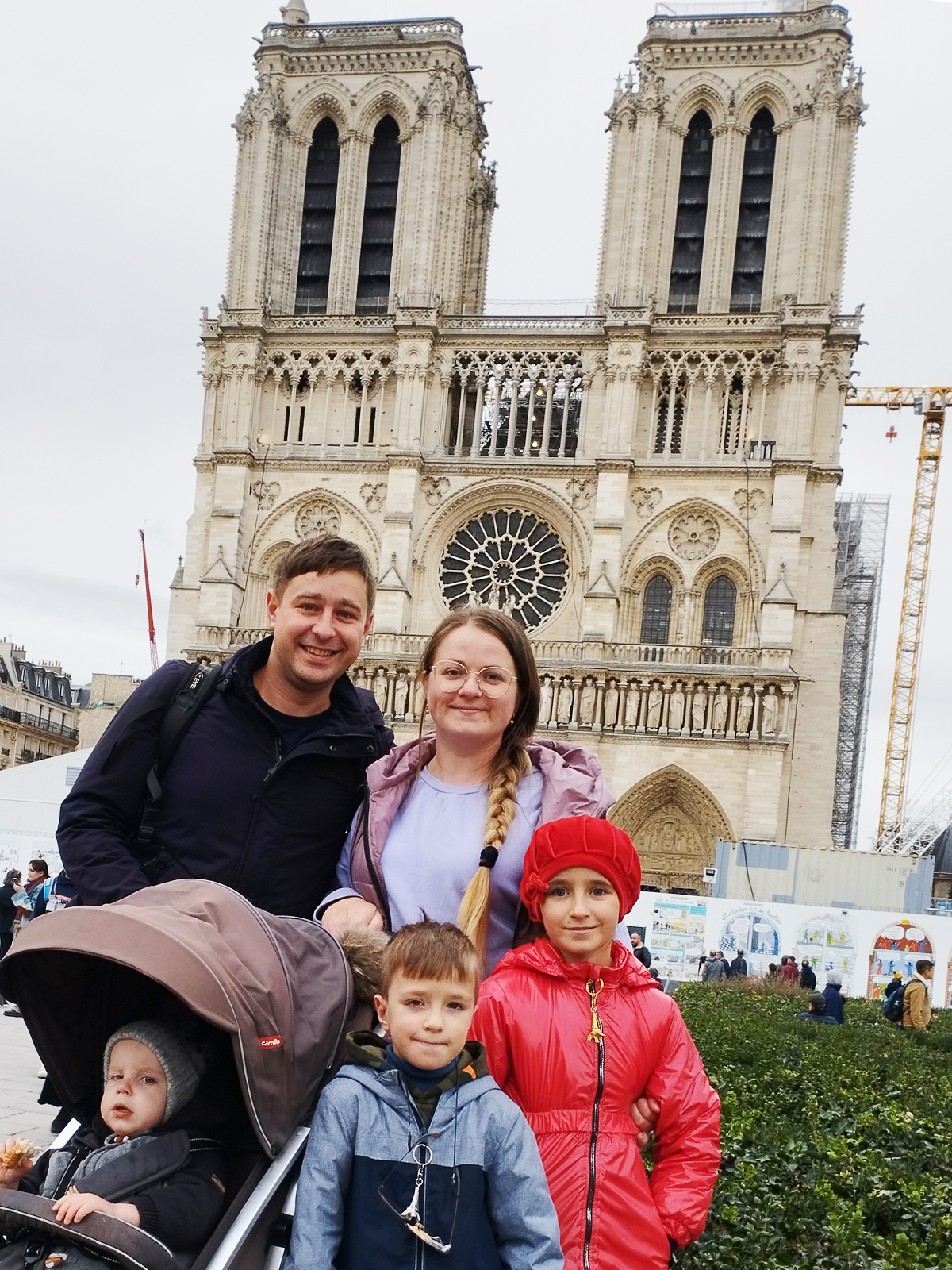
This article is not a guidebook and not a list of landmarks. It is a personal experience of observing a city that changes the way of seeing. If the text resonated with you — share it with those who also look attentively.


