


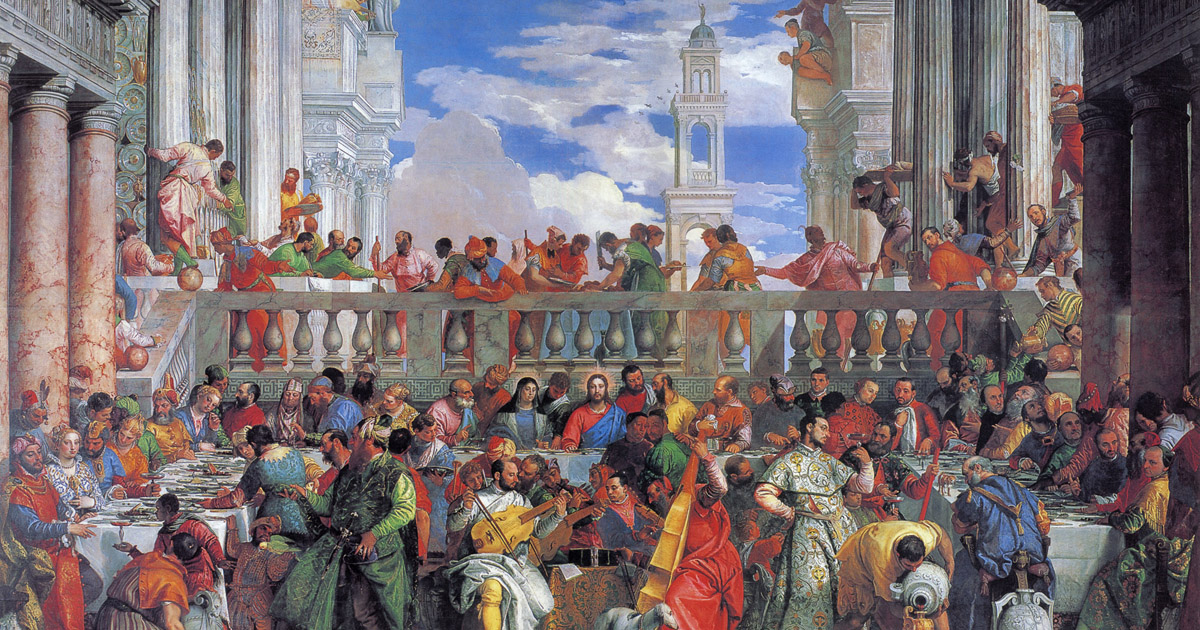
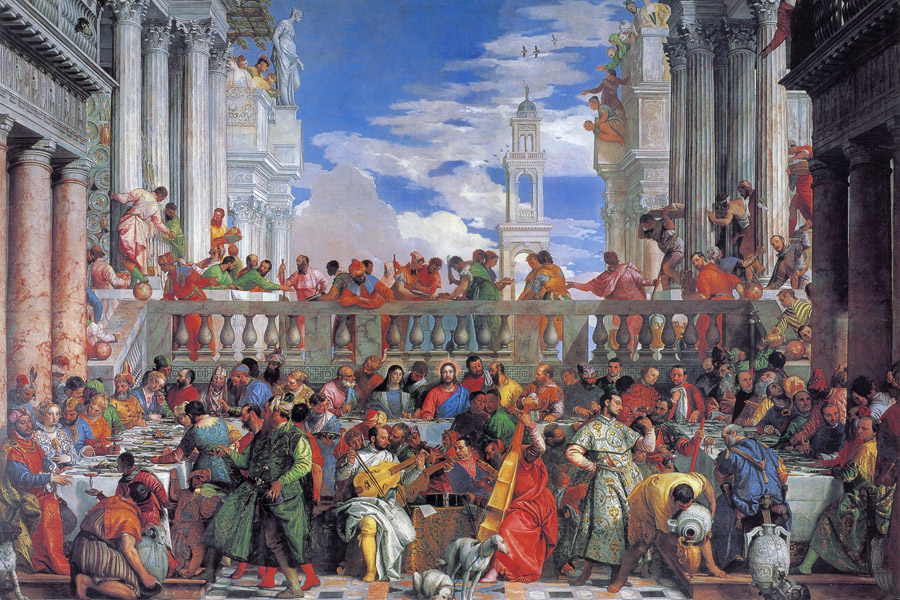
The Wedding at Cana — Paolo Veronese
Title: The Wedding at Cana (The Wedding at Cana / Les Noces de
Cana)
Artist: Paolo Veronese (Paolo Veronese, Paolo Caliari) (1528–1588)
Country: Italy (Venice)
Year: 1562–1563
Medium: Oil on canvas
Dimensions: approximately 677 Г— 994 cm (6.77 Г— 9.94 m)
Location: Louvre Museum, Denon Wing, Salle des Г‰tats
Category: Biblical composition / Myth and reality
Style / school: Late High Renaissance / Mannerism with a distinctive Venetian
colourism
Context of creation
The canvas was commissioned by Benedictine monks for the refectory of the monastery of San Giorgio Maggiore in Venice. Veronese worked on the painting in 1562–1563, aligning the festive subject of the biblical wedding with the splendour of a Venetian banquet. His contract required the use of the finest pigments, including ultramarine, and the maximum possible number of figures to fill the immense surface of the canvas.
Subject and composition
This grand depiction of a wedding banquet transports the viewer into a festive hall of the sixteenth century. The central part of the painting shows Jesus performing the miracle: water is turned into wine. Around him are musicians, servants, and guests in sumptuous dress, celebrating and entertaining themselves. The architectural backdrop with antique columns and Palladian-style structures amplifies the scale and drama of the scene.
Style and technique
Veronese combines the traditions of Venetian colourito with a richly dramatic organisation of figures. The glowing palette and attention to fabrics, light, and shadow create a powerful sense of a festive presence. The composition is Mannerist: broad, dynamic, and balanced. Every line leads the eye towards Christ, the quiet core within a sea of human movement.
Fate of the painting
For almost 235 years the canvas remained in the monastery of San Giorgio Maggiore. In 1797, as a military trophy, it was seized by Napoleon’s troops and taken to Paris. The huge painting was cut for transport and later reassembled. Since then it has been housed in the Louvre as one of the museum’s most outstanding masterpieces.
Personal view
Standing before The Wedding at Cana, you feel like a full participant in the banquet. Veronese opens the doors to a celebration where past and present intertwine. The painting breathes with hundreds of stories and with a colour metaphor of joy, art, and human life.


